
Bengaluru: In a significant step toward addressing thermal management challenges in Aviation Batteries, an autonomous institute under the Department of Science and Technology (DST) has partnered with industry to translate advanced materials research into deployable cooling technologies for aviation platforms.
Effective heat management remains a critical bottleneck for high-energy-density lithium-based Aviation Batteries, particularly during high-power operations.
Excessive heat generation can reduce efficiency, shorten battery lifespan, and pose serious safety risks.
While passive thermal management solutions such as Phase Change Materials (PCMs) offer advantages including low weight and zero power consumption, their adoption has been constrained by poor thermal conductivity in conventional PCMs.
Also Read: Wings India 2026 to Position India at the Centre of Global Civil Aviation
Addressing Thermal Challenges in Aviation Batteries Through Materials Innovation
Existing approaches to improve PCM performance typically involve adding high-thermal-conductivity materials to form composite PCMs.
However, these composites often face long-term reliability challenges, including additive agglomeration during repeated thermal cycles, leading to performance degradation.
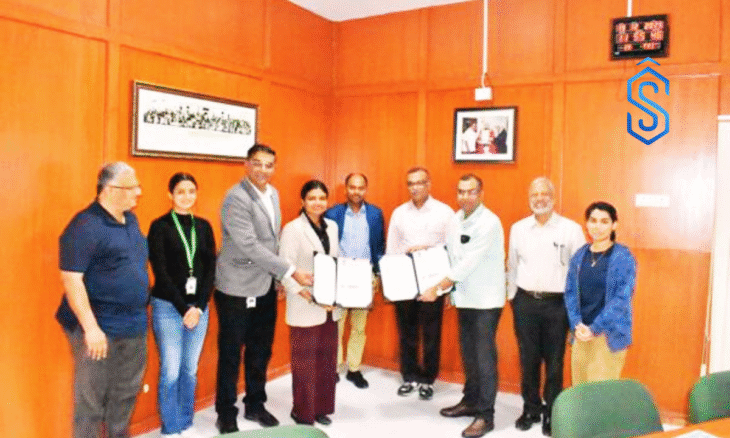
To address these limitations, a Memorandum of Understanding (MoU) has been signed between the Jawaharlal Nehru Centre for Advanced Scientific Research (JNCASR) – an autonomous institute under DST – and Dreamfly Innovations Pvt. Ltd., a Bengaluru-based company specialising in thermal battery technologies.
The collaboration focuses on developing advanced thermal materials and thermoelectric devices aimed at improving thermal storage and heat conversion in Aviation Batteries.
The partnership combines JNCASR’s expertise in materials design, synthesis, advanced characterisation, and thermal transport measurements – led by Prof Kanishka Biswas’s laboratory – with Dreamfly Innovations’ capabilities in aviation battery engineering and system-level integration.
Also Read: Indigo Flight Disruptions: DGCA Imposes ₹22.20 Crore Penalty, ₹50 Crore Bank Guarantee Mandated
The advanced thermal materials under development are designed to offer high thermal conductivity, enabling rapid absorption of excess heat during high-load operations.
These solutions aim to maintain battery temperatures within optimal operating ranges while ensuring lightweight design and long-term thermal stability.
This academia-industry collaboration brings together fundamental research and applied innovation to address key challenges related to drone performance, operational endurance, and safety, with a focused emphasis on next-generation Aviation Batteries.